What you need to know (from the AQA specification)
What you need to know (from the AQA specification)
The variety of life, both past and present, is extensive, but the biochemical basis of life is similar for all living things.
Monomers are the smaller units from which larger molecules are made.
Polymers are molecules made from a large number of monomers joined together.
Monosaccharides, amino acids and nucleotides are examples of monomers.
A condensation reaction joins two molecules together with the formation of a chemical bond and involves the elimination of a molecule of water.
A hydrolysis reaction breaks a chemical bond between two molecules and involves the use of a water molecule.
Overview: Why are monomers & polymers important?
Monomers and polymers are the basic units that make up many biological molecules which you will come across in this course (e.g. nucleotides, proteins, fats, carbohydrates, etc.)
We’re just using examples here to illustrate these ideas. Don’t worry if some of the terms are new: you’ll study each of these molecules in detail in later topics.
Monomers = 1
Monomers are the smaller units from which larger molecules are made.
To help you remember: If we break the word monomer down, it’s ‘mono’, which means ‘one’, and ‘mer’ which means part.
Polymers = Many
Polymers are molecules made from a large number of monomers joined together.
To help you remember: If we break the word polymer down, it’s ‘poly’, which means ‘many’, and ‘mer’ which means part.
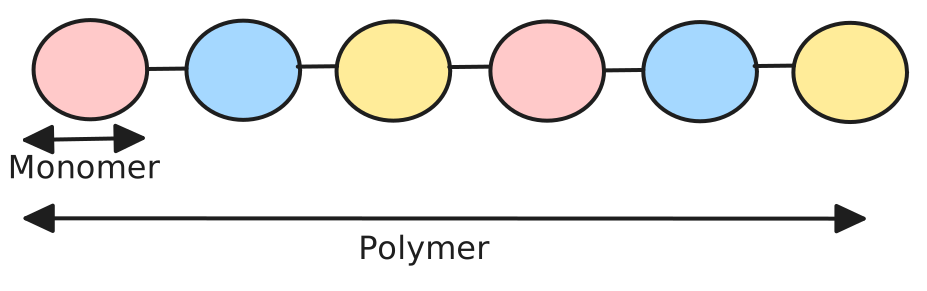
Examples of monomers & polymers
| Monomer | Polymer |
|---|---|
| Monosaccharide (e.g. glucose) | Polysaccharide (e.g. starch, cellulose) |
| Amino acid | Polypeptide / protein |
| Nucleotide | Polynucleotide (DNA or RNA) |
Common exam mistake when you review other biological molecules topics
- Disaccharides and dipeptides are not polymers. They are dimers (di meaning 2). A polymer must contain a large number of repeating monomers joined together.
- Triglycerides are made of 3 fatty acids and 1 glycerol, but they aren’t polymers, as they aren’t created by repeating monomers joined together. They are made of distinct parts rather than a long chain of repeating units.
How are Monomers & Polymers created?
Monomers are joined together to make a polymer through a condensation reaction.
Polymers are broken down into monomers through a hydrolysis reaction.
You can think of these as opposite reactions, one joins molecules together (condensation), one breaks them apart (hydrolysis).
- Condensation: water removed
- Hydrolysis: water needed
Condensation Reaction
A condensation reaction joins two molecules together with the formation of a chemical bond and involves the elimination of a molecule of water.
Examples of condensation reactions
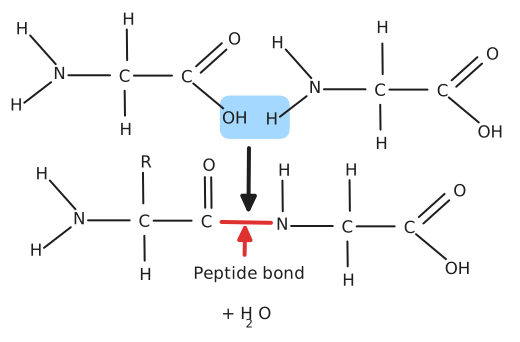
- Peptide bond:
- Joining of two amino acids together. The amine group (–NH₂) of one amino acid reacts with the carboxyl group (–COOH) of the other.
- A peptide bond forms and one molecule of water is released.
-
Formation of Disaccharides & Polysaccharides:
- 2 glucose molecules can join together in a condensation reaction to form a disaccharide. The bond formed is a glycosidic bond.
- Glucose molecules can also join together through condensation reactions to form a polysaccharide, which is a polymer (e.g. starch/glycogen, these are storage molecules)
-
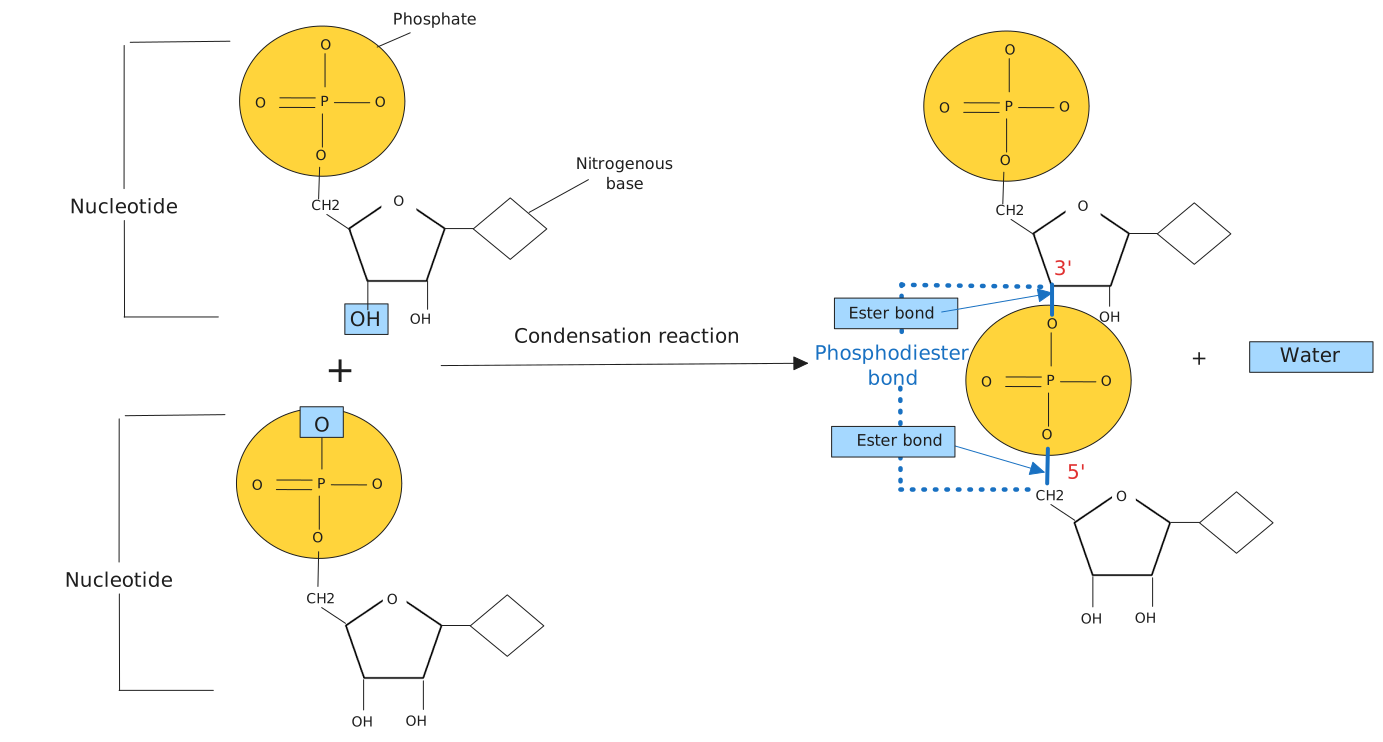
Nucleotides joining to form DNA/RNA:
- Nucleotides can join together through phosphodiester bonds to form the backbone of DNA/RNA molecules
Hydrolysis Reaction
A hydrolysis reaction breaks a chemical bond between two molecules and involves the use of a water molecule.
How to remember: Hydro = water, lysis = to break
If you are unsure of what different words mean in Biology, think about breaking the word down.
Examples of hydrolysis reactions
-
Digestion of starch to maltose:
- Starch is a polysaccharide made of repeating glucose. This can be broken down by amylase to produce maltose (disaccharide)
-
Polypeptides to Amino Acids: Proteases (peptidases) use water to break peptide bonds between amino acids.
-
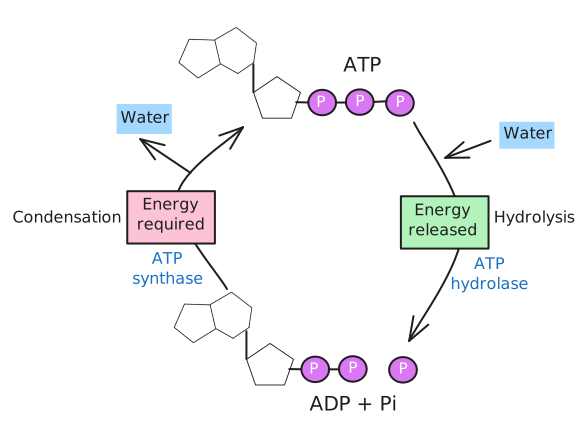
ATP Hydrolysis:
- ATP to ADP + Pi:
- ATP is not a polymer, so ADP and Pi are not monomers. This example shows that hydrolysis and condensation can break or join a bond between any two molecules, not just monomers.
Exam Question Practice
Describe the chemical reactions involved in the conversion of polymers to monomers and monomers to polymers.
Give two named examples of polymers and their associated monomers to illustrate your answer.
(5 marks)
Mark Scheme
- A condensation reaction joins monomers together and forms a (chemical) bond and releases water (1 mark)
- A hydrolysis reaction breaks a (chemical) bond between monomers and uses water (1 mark)
- A suitable example of polymers and the monomers from which they are made (1 mark)
- A second suitable example of polymers and the monomers from which they are made (1 mark)
- Reference to a correct bond within a named polymer (1 mark)
Tips from examiner reports
- Dimers are NOT polymers — give polymer examples (polysaccharides, polypeptides, polynucleotides), not disaccharides/dipeptides.
- Condensation and hydrolysis involve bond FORMATION or BREAKAGE respectively.