DNA sequencing
DNA sequencing is the process of determining the precise order of the nucleotides (As, Ts, Cs, and Gs) in a DNA molecule.
What you need to know (based on the AQA specification)
What you need to know (based on the AQA specification)
Sequencing projects have read the genomes of a wide range of organisms, including humans. Sequencing methods are continuously updated and have become automated.
Human Genome Project
- In 2003, the human genome project sequenced ‘essentially’ the entire human genome (around 92% of it)
- This included: 3 billion base pairs and 20,000 genes!
- It helped to identify genes linked to numerous conditions (e.g., breast cancer, Alzheimer’s, cystic fibrosis), leading to better understanding of disease causes.
- It also improved diagnostics, by enabling genetic testing for early detection of certain diseases (e.g BRCA1/2 mutations)
- The Human Genome Project (HGP) was open access, meaning all sequence data was made publicly available.
- Advances in sequencing technology since the HGP have made DNA sequencing faster and cheaper.
- If you are interested in this fascinating project, there are links below
- https://www.genome.gov/human-genome-project
- https://doe-humangenomeproject.ornl.gov/chromosome-x/
What you need to know (based on the AQA specification)
What you need to know (based on the AQA specification)
Determining the genome of simpler organisms allows the sequences of the proteins that derive from the genetic code (the proteome) of the organism to be determined. This may have many applications, including the identification of potential antigens for use in vaccine production
Genome vs Proteome
It’s important to understand the differences between the genome and the proteome
-
Genome = The complete set of genetic material in a cell, including all DNA base pairs and genes.
-
Proteome = Entire set of proteins expressed by a cell, tissue, or organism at a specific time and under particular conditions.
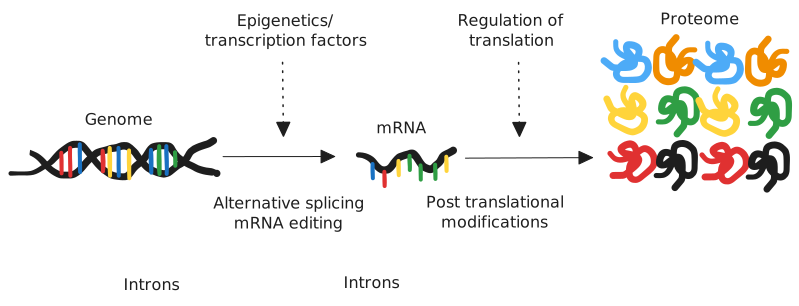
The genome is relatively static, whereas the proteome is dynamic (it can regularly change). The proteome can change during development and in response to environmental factors, and it is far more complex than the genome due to alternative splicing, regulation of transcription & translation, and post-translational modifications.
If you look at this image you can see the steps in between the genome to proteome, which introduce complexity.
Simpler Organisms’ Proteome
It is easier to determine the proteome of simpler organisms, such as bacteria, for several reasons:
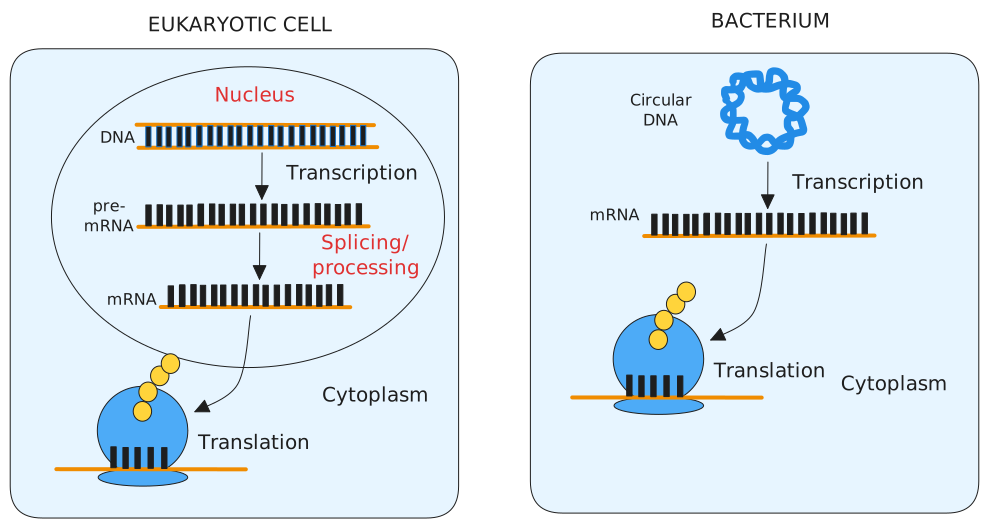
- Bacteria usually lack introns (non-coding DNA). This means that the genome can be directly translated into the proteome.
- Bacterial genomes are much smaller than eukaryotic genomes and often have a single circular chromosome. Their DNA is not associated with histone proteins.
- Bacteria have simpler regulation of gene expression, with fewer epigenetic modifications (see comparison of complex below)
As a result, once the genome of a bacterium is sequenced, the proteins it can produce (its potential proteome) can be predicted more accurately.
This has many applications, such as in the identification of potential antigens. These antigens can then be used in the development of vaccines. The antigen can be given in controlled doses as a vaccine, which triggers your immune system to produce an immune response Cell Recognition
Complex Organisms’ Proteome
What you need to know (based on the AQA specification)
What you need to know (based on the AQA specification)
In more complex organisms, the presence of non-coding DNA and of regulatory genes means that knowledge of the genome cannot easily be translated into the proteome.
In more complex organisms, such as eukaryotes, our understanding of the genome doesn’t easily translate into our understanding of the proteome, for several reasons:
- Eukaryotic genes often contain introns (non-coding DNA), which are removed during splicing
- Alternative splicing also means that a single gene can produce multiple different mRNA molecules, each coding for a different protein.
- Gene expression is tightly regulated by regulatory genes, which can code for transcription factors that activate or repress genes at specific times and in specific cells.
- Gene expression is also affected by epigenetic modifications e.g. DNA methylation, histone modification
- Post-translational modifications can add chemical groups (e.g. phosphate or methyl groups) to proteins, which can significantly alter protein structure and function.
Image below shows the differences between the process of going from the genome (DNA sequence) to proteome for eukaryote vs bacteria
Exam Question Practice
What is meant by a genome?
(1 marks)Mark Scheme
- The genome is all the DNA (genetic material) present in a cell or organism (1 mark)
Determining the genome of the viruses could allow scientists to develop a vaccine. Explain how.
(2 marks)Hint
Think about the link between genome and proteome, and what part of a pathogen is used in vaccines.
Mark Scheme
- Sequencing the genome allows scientists to identify the proteins the virus can produce (i.e. determine the proteome) (1 mark)
- From these proteins, scientists can identify potential antigens — molecules on the virus surface that could be used in a vaccine to trigger an immune response (1 mark)
Complete the following definitions.
The genome is …
The proteome is …
(2 marks)Mark Scheme
- The genome is the complete set of genes/DNA in a cell or organism (1 mark)
- The proteome is the full range of proteins that a cell/organism can produce (or: the range of proteins the genome/DNA can code for) (1 mark)