Overview
What you need to know (based on the AQA specification)
What you need to know (based on the AQA specification)
The structure of the nephron
What are the kidneys role?
The kidney is a vital organ and has a key role in:
- Filtering the blood, removing waste products from it
- Maintaining and regulating water potential and electrolyte balance
- Excreting waste products as urine
Structure of kidneys
Mammals have 2 kidneys, each made of 3 main regions:
- Cortex
- Outer region
- This includes: Glomerulus, Bowman’s capsule, the PCT & DCT
- Medulla (m for middle region)
- Middle region
- Loop of Henle
- Renal Pelvis
- Collecting urine from collecting ducts, passes to ureter
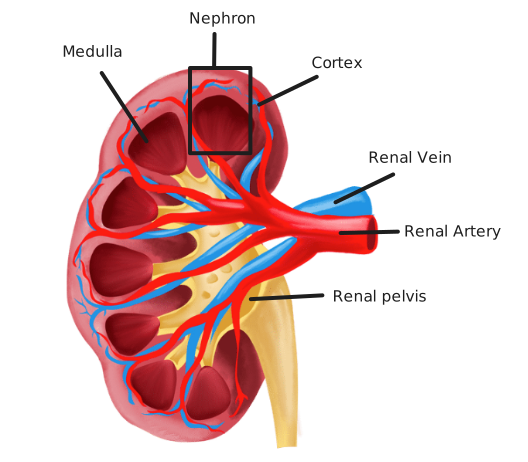
A nephron is the functional unit of the kidney (image below)
What does functional unit mean for nephrons?
What does functional unit mean for nephrons?
It’s an independent structure responsible for performing the kidney’s main jobs: filtering blood, removing waste products, and forming urine.
Osmoregulation stages
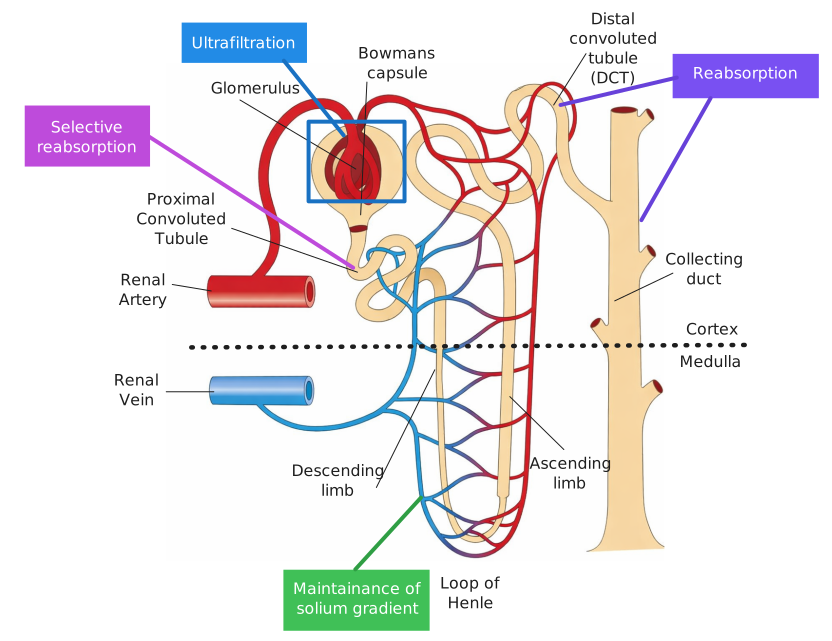
The kidneys have to maintain the water potential of the blood plasma and the tissue fluid, this is done through the following stages:
- Ultrafiltration: Formation of glomerular filtrate
- Selective Reabsorption of glucose & water at Proximal Convoluted Tubule (PCT)
- Maintenance of a sodium ion gradient in medulla by Loop of Henle
- Reabsorption of water by Distal Convoluted Tubule (DCT) and collecting ducts
Nephron with key structures and stages of osmoregulation
Ultrafiltration
What you need to know (based on the AQA specification)
What you need to know (based on the AQA specification)
The structure of the nephron and its role in: the formation of glomerular filtrate
Ultrafiltration
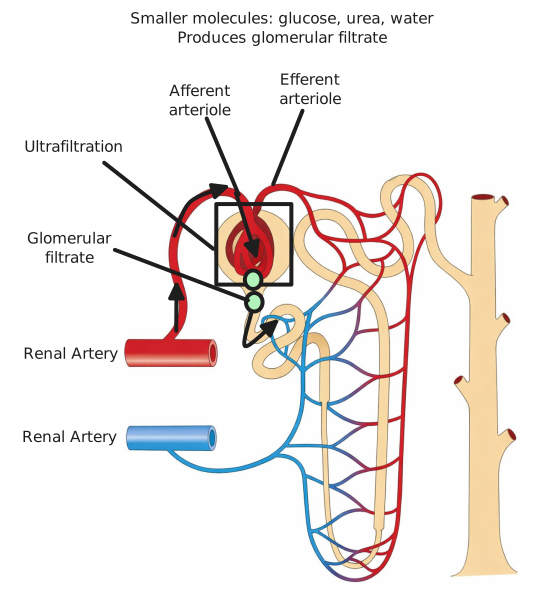
High hydrostatic pressure forces water and small molecules out of glomerulus into Bowman’s capsule forming glomerular filtrate. Blood cells and proteins cannot pass through and remain in the bloodstream
How is a high hydrostatic pressure maintained?
- The diameter of afferent arteriole (the arteriole that takes blood into the glomerulus) is greater than the efferent arteriole (takes filtered blood towards the capillaries) this results in the blood in the glomerulus being under high hydrostatic pressure.
Glomerular Capillary Walls
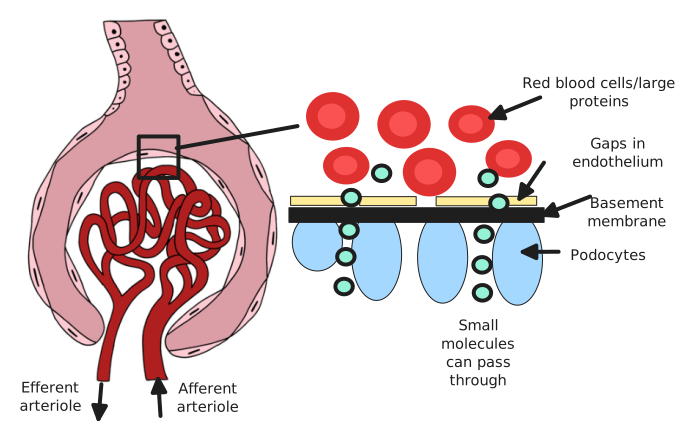
The glomerular capillary wall has layers the blood has to pass through in the ultrafiltration process:
- Gaps in the Endothelium - this has pores which prevent red blood cells passing through
- Basement membrane - the main filter which prevents proteins from being filtered out the blood
- Epithelium - Gaps between the podocytes
- These podocytes are specialised cells attached to the basement membrane, they allow filtrate to pass between them
These 3 layers prevent larger molecules, such as red blood cells and proteins passing through, so these remain in the blood. The substances (smaller molecules) that pass through enter the Bowman’s capsule and are known as the glomerular filtrate.
Where do the proteins and blood cells go?
Where do the proteins and blood cells go?
They remain in the blood and travel via the efferent arteriole to the capillaries.
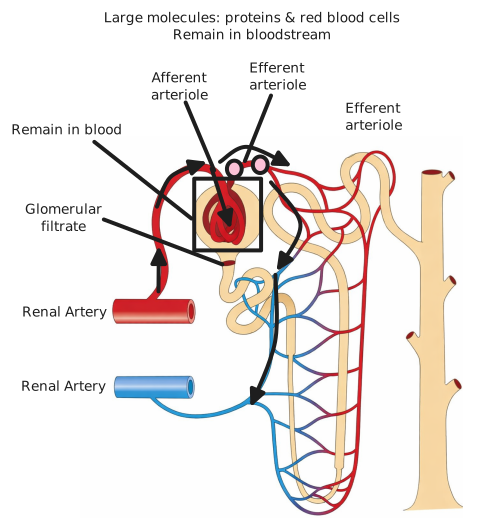
High levels of protein in the urine, known as proteinuria or albuminuria, can occur when the glomeruli are damaged, allowing proteins to pass through basement membrane from the blood
Selective Reabsorption
What you need to know (based on the AQA specification)
What you need to know (based on the AQA specification)
- The structure of the nephron and its role in: reabsorption of glucose and water by the proximal convoluted tubule
As this glomerular filtrate passes into the proximal convoluted tubule (PCT), selective reabsorption occurs.
This is where the body reabsorbs ‘useful’ substances back into the bloodstream, glucose and water.
Why is it called 'selective' 'reabsorption'?
Why is it called 'selective' 'reabsorption'?
- Selective because it reabsorbs useful substances only, doesn’t reabsorb waste products such as urea
- Reabsorption as these substances have already been absorbed in digestion
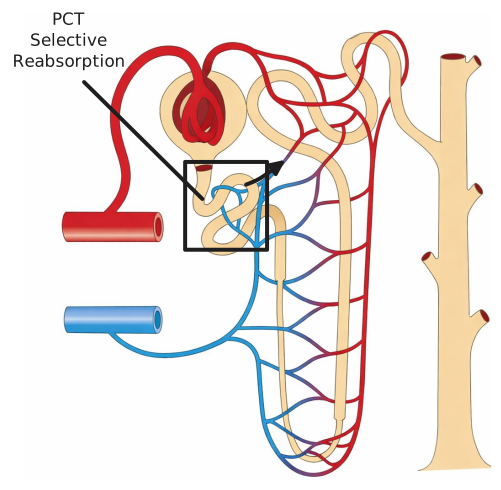
Adaptations of PCT
To ensure the useful substances (glucose) can be reabsorbed, the PCT has some specific features
- Microvilli on epithelium of PCT to provide a large surface area for reabsorption of useful materials from glomerular filtrate into capillaries
- Lots of mitochondria to produce ATP for active transport
- Many carrier proteins/channel proteins for facilitated diffusion
- Many carrier proteins for active transport
- Cells packed together (no fluid can pass between cells)
Tip
Active transport only uses carrier proteins, it doesn’t use channel proteins. Whereas facilitated diffusion can use both carrier and channel proteins

Selective Reabsorption Process
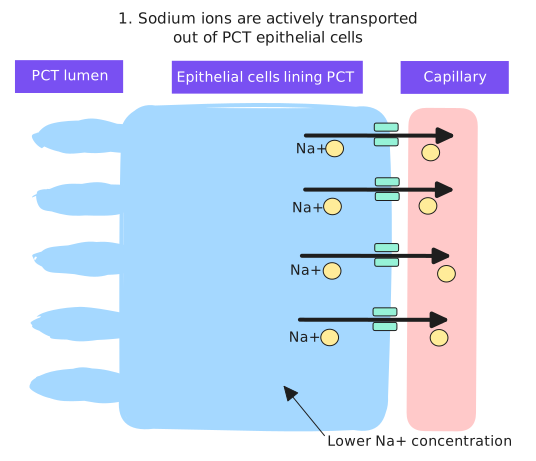
- Active Transport: Sodium ions (Na+) are actively transported out of the PCT epithelial cells and into blood capillaries. This reduces the Na+ concentration in epithelial cells lining the PCT
- Co-transport: Na+ moves from the PCT lumen into the epithelial cells, down its concentration gradient. Na+ is co-transported by carrier proteins with substances like glucose and amino acids into the epithelial cells.
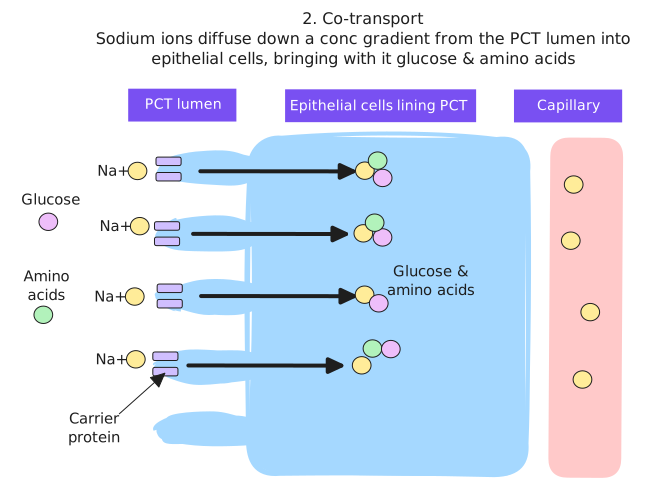
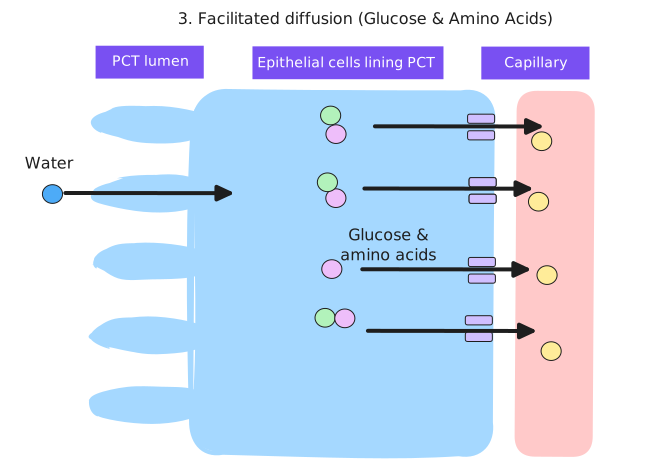
- Facilitated diffusion & osmosis: Glucose and amino acids move into the capillaries from the PCT via facilitated diffusion. Due to the movement of solutes, water also moves via osmosis into epithelial cells & capillaries
Loop of Henle
What you need to know (based on the AQA specification)
What you need to know (based on the AQA specification)
The structure of the nephron and its role in: maintaining a gradient of sodium ions in the medulla by the loop of Henle
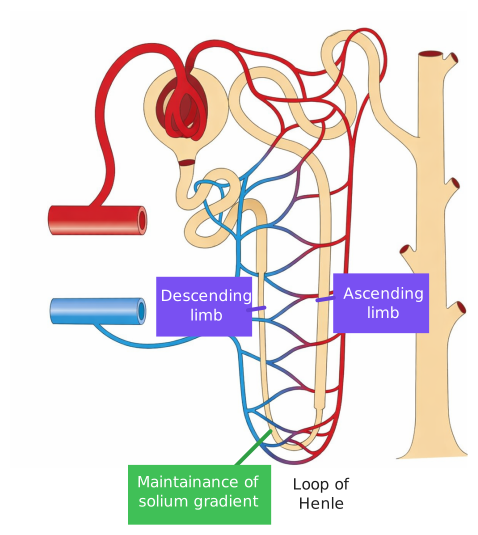
The Loop of Henle is a long curved tubule (see image) which extends into the medulla. It’s responsible for maintaining the gradient of sodium ions in the medulla so water can be reabsorbed into the blood. We will look at how the kidney does this below.
Important
- Ascending limb (the thicker one) is impermeable to water
- Descending limb is permeable to water
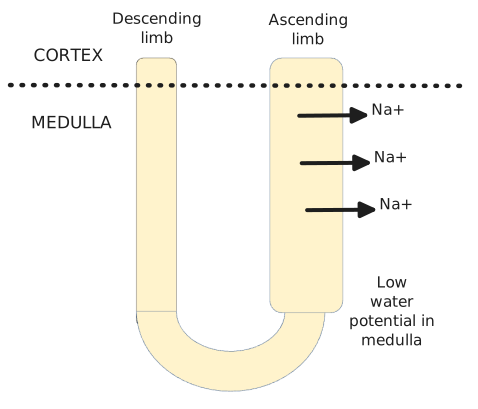
Sodium ions are actively transported out of the ascending limb.
This creates a lower water potential in the medulla, due to the concentration of these sodium ions.
What feature of the ascending limb do you think will be important?
What feature of the ascending limb do you think will be important?
Mitochondria to produce ATP for active transport.
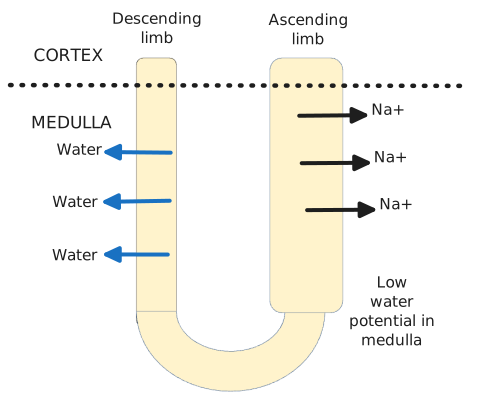
Water moves out of descending limb
As there is a low water potential in the medulla, water moves out of the descending limb into the medulla. It moves into interstitial space, the space between kidney tubules and blood vessels and can then be reabsorbed into the blood through the capillary network
Why does water not move out of ascending limb?
Why does water not move out of ascending limb?
The ascending limb is impermeable to water so water can’t move out of this limb.
Filtrate becomes more concentrated
As the filtrate travels down the descending limb it becomes progressively more concentrated (most concentrated is at the bottom of the hairpin turn)
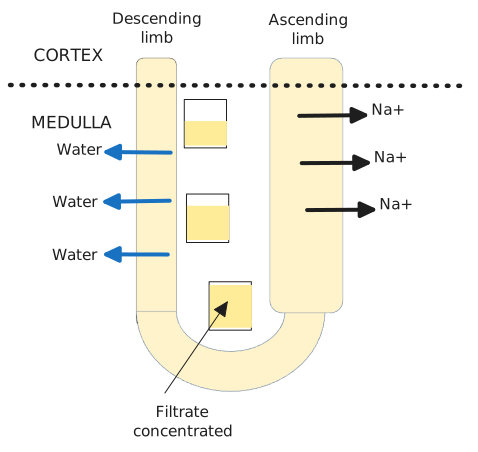
Sodium ions diffuse out of bottom of ascending limb
Sodium ions also diffuse out of the bottom of the ascending limb, this causes the water potential of the medulla to decrease even further
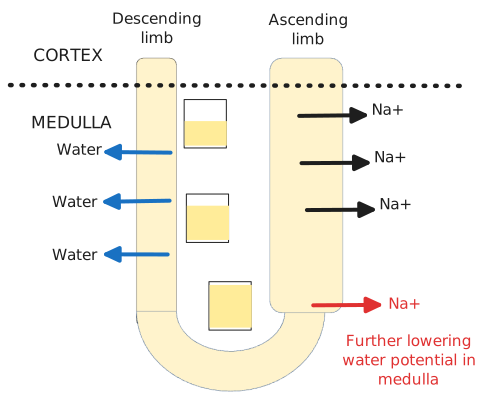
Reabsorption of water
What you need to know (based on the AQA specification)
What you need to know (based on the AQA specification)
- The structure of the nephron and its role in: reabsorption of water by the distal convoluted tubule and collecting ducts.
With a low water potential in the medulla, water can move out the distal convoluted tubule (DCT) and collecting duct by osmosis into the medulla (interstitial space). This water can then be reabsorbed into the blood through the capillary network.
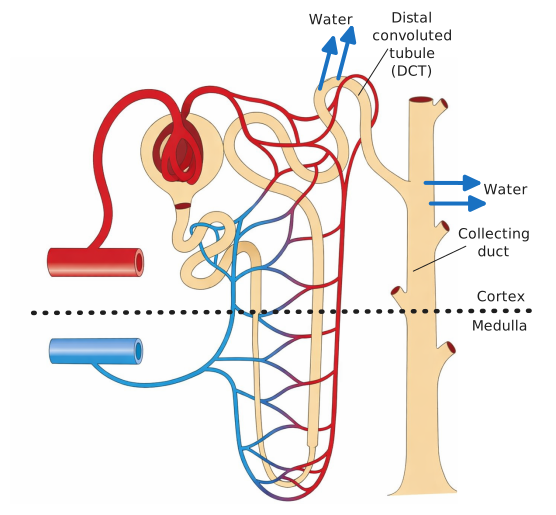
The volume of water which is reabsorbed into the blood via the capillary network is controlled by changing the permeability of the DCT and collecting duct. This is done by antidiuretic hormone (ADH).
What does the countercurrent multiplier mean?
What does the countercurrent multiplier mean?
- Countercurrent: Filtrate flows down the descending limb and up the ascending limb in opposite directions
- Multiplier: Ascending limb actively pumps out Na+ (& Cl-) ions
This means that the water potential in medulla is lower than the filtrate, therefore water will continue to move by osmosis and be reabsorbed back into blood.
ADH
What you need to know (based on the AQA specification)
What you need to know (based on the AQA specification)
Osmoregulation as control of the water potential of the blood. The roles of the hypothalamus, posterior pituitary and antidiuretic hormone (ADH) in osmoregulation.
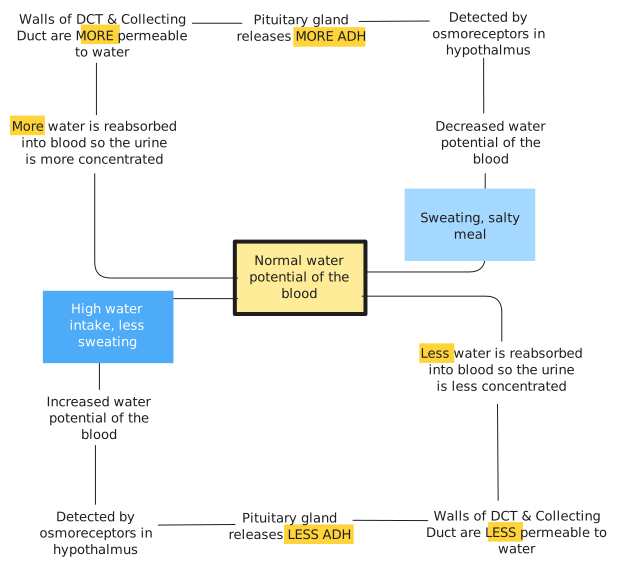
Osmoreceptors detect low water potential of blood
- Osmoreceptors in the hypothalamus detect low water content of the blood (decrease in water potential)
- Hypothalamus produces ADH
- This is passed into the posterior pituitary gland and from here it releases ADH into the bloodstream
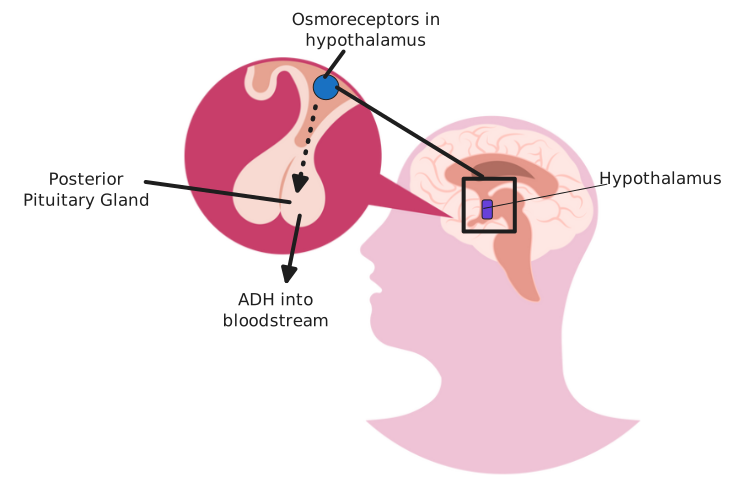
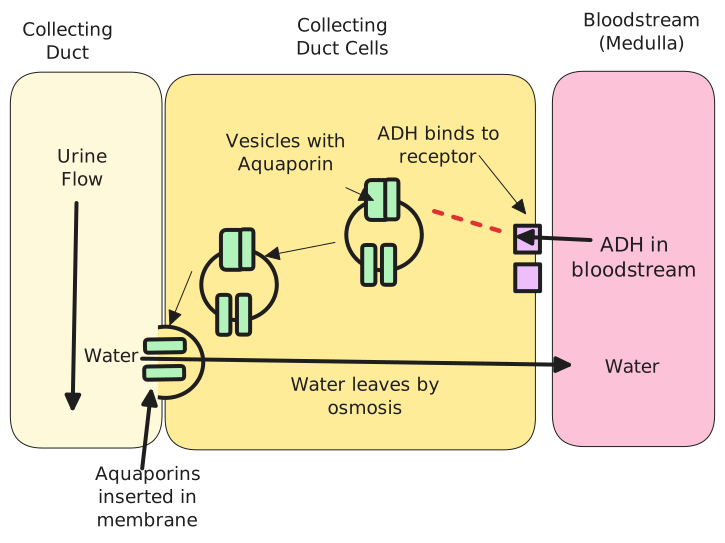
ADH binds to receptors on DCT & collecting duct
- ADH passes to the kidneys and binds to receptors on cell membrane of the DCT & collecting duct
- This increases the permeability of DCT and collecting duct walls
How ADH increase the permeability of DCT & Collecting Ducts?
- When ADH binds to receptors on cell membrane of DCT & Collecting Duct
- This leads to activation of enzyme (phosphorylase)
- This causes vesicles with aquaporins (channel proteins act as water channels) to move and fuse with cell membrane
- This makes them more permeable to water
- More water leaves the collecting duct/DCT by osmosis down concentration gradient and returns to the blood
Summary diagram
Exam Question Practice
Describe and explain how three features of the cells in the proximal convoluted tubule allow the rapid reabsorption of glucose into the blood.
(3 marks)Hint
Focus on features of the CELLS, not the tubule structure. What adaptations help with reabsorption?
Mark Scheme
- Microvilli on the cell-surface membrane provide a very large surface area for rapid reabsorption of glucose from the filtrate (1 mark)
- Many channel/carrier proteins allow glucose to enter the cell via facilitated diffusion down its concentration gradient (1 mark)
- Many carrier proteins allow Na⁺ to be pumped out by active transport, maintaining the low Na⁺ concentration that drives co-transport (1 mark)
- Many co-transport proteins move glucose (and amino acids) into the cell alongside Na⁺ (1 mark)
- Many mitochondria to produce ATP for the active transport of sodium ions (1 mark)
- Many ribosomes to synthesise the large number of carrier and channel proteins required (1 mark)
Tips from examiner reports
- Only 11% got full marks. Common errors: Describing tubule not cells. Confusing microvilli with villi.
- Tips: Cell features: microvilli (large SA), many mitochondria (ATP for active transport), many carrier proteins.
Antidiuretic hormone (ADH) binds to V receptors found in cell-surface membranes in two parts of a nephron.
Name the two parts of a nephron where V receptors are found.
(1 marks)Hint
Which parts of the nephron are permeable to water under the influence of ADH?
Mark Scheme
- Collecting duct and distal (convoluted) tubule (1 mark)
Tips from examiner reports
- ~42% correct. ‘DCT’ not accepted (not in specification).
- Tips: ADH makes collecting duct and distal convoluted tubule permeable to water. Write names in full.
V receptors only bind with ADH.
Suggest and explain why.
(2 marks)Hint
ADH binds to a receptor. How does binding work? Think about shape and specificity.
Mark Scheme
- The V receptor has a specific tertiary structure that gives it a particular 3D shape (1 mark)
- Only ADH has a complementary shape to fit the receptor — other molecules have different shapes and cannot bind (1 mark)
Tips from examiner reports
- ~50% got both marks. Errors: Saying ‘active site’, ‘substrate’ (wrong context - it’s a receptor, not an enzyme).
- Tips: ADH has complementary shape to receptor. Tertiary structure determines shape.
Name the part of the body which releases antidiuretic hormone (ADH) into the blood.
(1 marks)Hint
ADH is made in one place and released from another - which specific part of the pituitary gland is involved?
Mark Scheme
- Posterior pituitary (1 mark)
Tips from examiner reports
- Only 30% correct. Common errors: omitting ‘posterior,’ naming hypothalamus, liver, kidney, or pancreas.
Alcohol decreases the release of ADH into the blood.
Suggest two signs or symptoms which may result from a decrease in ADH.
(2 marks)Hint
If less ADH is released, what happens to water reabsorption? How would this affect urine volume and concentration?
Mark Scheme
- Dehydration/thirst — less water is reabsorbed from the collecting duct, so the body becomes short of water (1 mark)
- Increased volume of urine / frequent urination — without ADH the collecting duct wall is less permeable, so less water is reabsorbed (1 mark)
- Dilute (pale) urine — less water reabsorption means solutes are more diluted in a larger volume of urine (1 mark)
Tips from examiner reports
- 47% got both marks, 78% got 1+. Some gave opposite symptoms (concentrated instead of dilute urine). Others gave alcohol-related symptoms (headaches, dizziness).
Describe the effect of ADH on the collecting ducts in kidneys.
(3 marks)Hint
What specific channel proteins are involved? By what process does water move out of the collecting duct - and in which direction?
Mark Scheme
- ADH causes aquaporins (water channel proteins) to be inserted into the cell-surface membrane of the collecting duct (1 mark)
- This increases the permeability of the collecting duct to water (1 mark)
- Water moves by osmosis out of the collecting duct (down the water potential gradient) and is reabsorbed into the blood (1 mark)
Tips from examiner reports
- 77% got 1+ mark but only 23% full marks. Many omitted ‘osmosis.’ Some said water moves INTO collecting ducts (wrong direction). Aquaporins mentioned but not always linked to membrane.